

 Products
 Contact
 Call
19-11-2026
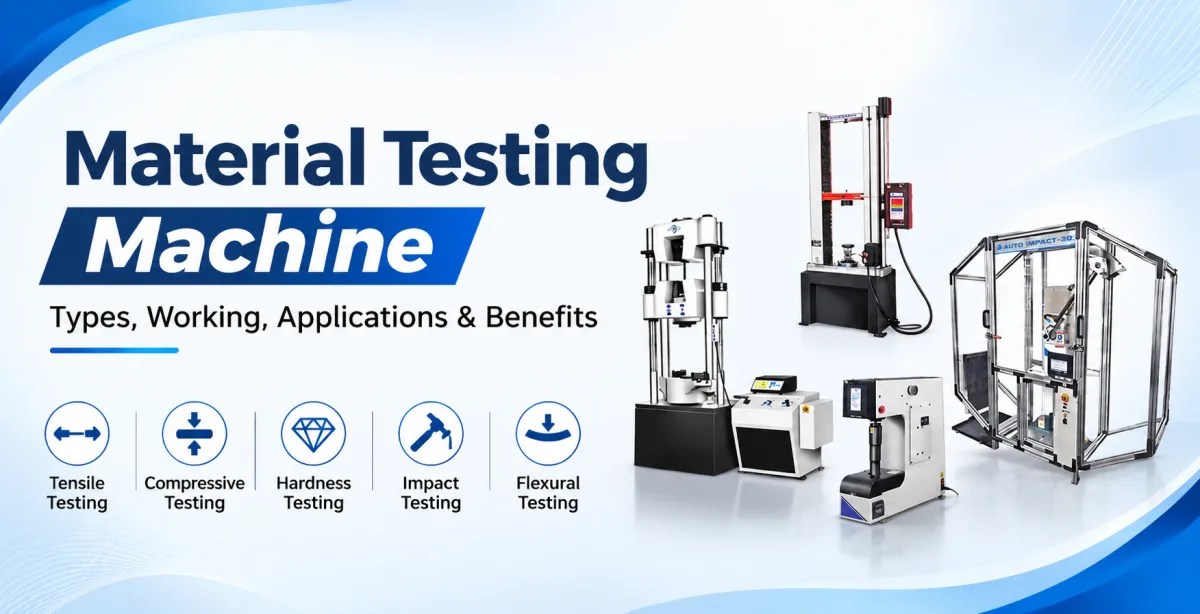
Everything that you see around you or use in everyday life, including cars, household appliances, buildings, roads and so on, is made from some kind of material. These materials are tested for strength, durability and flexibility before they are put to use. And that’s when a material testing machine comes in handy. These machines help manufacturers, engineers and researchers check different properties of materials, prevent failures and ensure materials meet quality standards.
If you want to learn more about material testing machine, then read this post. Here, we have explained everything about these machines, including types, uses and applications. Let’s dive in…
Material Testing Machine – What Is It?
A material testing machine is equipment designed to check the strength of different kinds of materials. They mainly check how materials respond to forces, loads, temperatures, and other conditions. A testing machine helps determine whether a material is strong and durable enough for its intended use or not. These machines measure properties such as tensile strength, compressive strength, hardness, flexibility and impact resistance across industries. They come in different sizes so that different samples can be tested in different settings.
Working Process of Material Testing Machines
The working process depends on the type of machine and the material being tested. However, most tests follow a similar process. Steps include:
Step 1: Preparing a sample of the material according to the test requirements.
Step 2: Placing the sample securely inside the machine.
Step 3: The machine then applies a specific force or exposes the sample to a particular condition.
Step 4: Sensors and measuring devices record how the material responds during the test. The machine mainly measures how much force the material can withstand before breaking or how much it bends under pressure.
Step 5: Engineers then utilize collected results to know whether the material is suitable for particular application and identify if it meets the required specifications.
Some machines perform tests automatically and display the results on a digital screen. While others require everything to be done manually, such as setting up the test, monitoring the process and reviewing the measurements.
Types of Material Testing Machines
Different materials need different tests, so different machines are used in laboratories and industries. Here are some of the most popular ones; take a look…
1. Universal Testing Machine (UTM)
A Universal Testing Machine is one of the most widely used machines for testing the material strength and behaviour. It performs different tests by applying force to a material sample. It is mainly used for tensile, compression and bending tests. A UTM can be used for testing different materials, including metals, plastics, rubber, wires, cables and so on. Manufacturers use test reports to check product quality and ensure that materials meet the required strength standards.
2. Compression Testing Machine (CTM)
A compression testing machine checks how much pressure a material can withstand. It is mainly used to test concrete. It helps know whether the material can support the loads expected in buildings, bridges, roads and other structures. Besides concrete, CTM can also be used for testing bricks, cement, stones and other construction materials. Engineers use test results to decide whether the material is suitable for intended applications or not.
3. Tensile Testing Machine (TTM)
A tensile testing machine is meant to measure how a material behaves when it is pulled in opposite directions. The test basically helps determine the material's tensile strength, how much it stretches and how much it can elongate before breaking. TTM is used for testing tensile strength of metal wires, plastic sheets, rubber components and textile fibres. Test results allow manufacturers to select appropriate material for products that experience pulling forces during use.
4. Hardness Testing Machine
A hardness testing machine measures a material’s resistance to dents and scratches. Most common methods include Rockwell, Brinell and Vickers testing. These machines are widely used to test metals, tools, machine parts and other components to ensure quality and durability.
5. Impact Testing Machine
An impact testing machine checks how well a material withstands a sudden force or blow. Some materials can handle slow pressure but may break when hit suddenly. Impact testing helps identify this weakness. Impact testing machines test metals, plastics and other materials that may face sudden shocks, such as the ones used in vehicle parts. The results help engineers choose materials that can withstand sudden forces without breaking.
6. Fatigue Testing Machine
A fatigue testing machine checks how a material performs when it experiences repeated loading and unloading over time. Fatigue testing is particularly important for components used in vehicles, aircraft, machinery and other equipment that operates continuously. The results help engineers understand how materials perform over time and make products more reliable.
7. Torsion Testing Machine
A torsion testing machine is used for checking how much twisting force a material can withstand before it bends or breaks. It is commonly used to test shafts, wires, fasteners and metal rods. These tests help manufacturers make the right choice of materials for mechanical parts.
Uses and Applications of Material Testing Machines
Material testing machines are used across several industries, including:
1. Construction Industry
The construction industry uses material testing machines to check the quality and strength of concrete, cement, bricks, steel and other building materials. Construction industry mainly uses compression testing and tensile testing machines for determining the strength of concrete and evaluating steel reinforcement bars. These tests ensure that materials used in buildings, roads, bridges, and other structures are strong and safe.
2. Automotive Industry
Automobile manufacturers also frequently use material testing machines to check the strength and durability of metal, plastic, rubber and composite components used in the production of automobile. Material testing allows manufacturers to identify weak materials, improve component design and maintain consistent product quality.
3. Aerospace Industry
Aircraft components must be able to withstand demanding conditions, such as repeated stress, vibration and changes in temperature. Testing machines help engineers check different materials, including metals, alloys and composite materials used in aircraft structures and components. Results help manufacturers select material that offers highest performance and meet safety standards.
4. Manufacturing Industry
Testing machines are also used in manufacturing industry to check raw materials and finished products. These machines ensure that defected items are rejected before reaching the end consumers. Also, these tests ensure consistent quality and help manufacturers choose suitable materials.
5. Plastic and Rubber Industry
Products made of plastic and rubber need to meet certain standards for strength, flexibility and impact resistance. Testing machines allow manufacturers check these properties before finalizing the material for production. They test materials used in pipes, packaging, seals, and hoses to ensure they work well.
6. Research and Educational Institutions
Students in engineering colleges, research centres and material testing laboratories also use machines for studying how different materials behave under various conditions. Students use them for practical experiments and understand material properties, while researchers use them to develop new materials and improve existing ones.
Benefits of Using a Material Testing Machine
Testing machines offer several benefits to manufacturers, engineers and researchers, including:
-
Testing machines help identify weaknesses in the material and prevent it from being used in the production.
-
It helps check whether materials can withstand the forces they may experience during use.
-
Help reduce waste, repairs and product failures by identifying deformities or weaknesses early on.
-
Help manufacturers maintain consistent quality and reliable performance across production batches.
-
Testing machine results help engineers compare different materials and select the right one for a particular application.
-
Lastly, it helps determine whether materials meet applicable industry standards and project requirements or not.
Top 6 Tips to Choose the Best Material Testing Machine
Selecting the right machine can seem like a task. But worry not! We have got you covered here. Follow these tips to make the best purchase…
-
Determine Material Type: Before you invest in a machine, do determine the material type which you want to test because there is no single machine to test every material.
-
Testing Requirements: Identify the type of test you need, such as tensile, compression, hardness, impact, fatigue or torsion testing.
-
Load Capacity: Choose a testing machine that can apply the force required for your tests.
-
Accuracy and Repeatability: Select a machine that provides reliable measurements and consistent results.
-
Testing Standards: Choose a machine that supports the relevant IS, ASTM, ISO or other applicable testing standards.
-
Choose Reputable Manufacturer: Make sure you buy your machine from a trustworthy testing machine manufacturer, who also deals in spare parts and offer after-sales support.
The Bottom Line
So, this is all about the material testing machine. Testing machines are indispensable for businesses that manufacture or use materials and products that need to meet quality and safety standards. It helps check the strength, durability and quality of materials used in everyday products and large industrial projects and help businesses make well-informed business decisions. However, it is crucial to choose the right machine for your requirements. Also, you should only buy it from a trustworthy testing machine manufacturer. Canan Testing Machines & Calibrations LLP is a renowned name in the industry, offering superior quality testing machines at the most competitive prices in India. Feel free to contact Canan Testing Machines for more details!